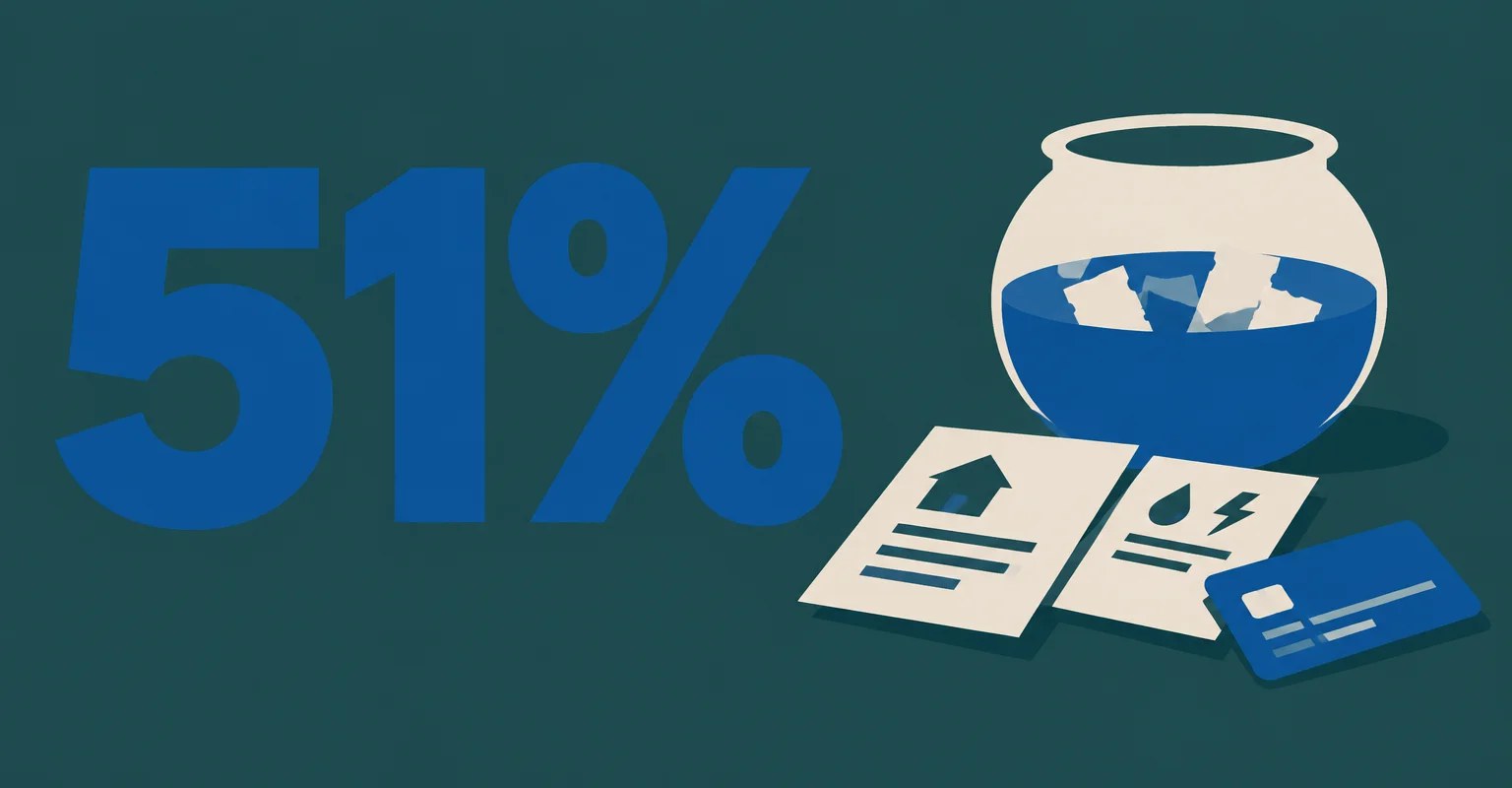
More than half of U.S. sports bettors surveyed said they had wagered to pay bills, while substantial minorities said they had used betting to pay credit-card and other costs. The findings come from a U.S. News survey of 1,200 Americans who had placed a sports bet in the previous year, conducted from Aug. 31 through Sept. 3.
Fifty-one percent said they wagered to pay off bills. More than one in five planned to use betting to cover rent or mortgage payments, 18% had used it to pay credit-card debt and another 18% had used it for unexpected costs. More than 5% cited student loans and 2% cited tuition.
Nineteen percent reported outstanding debt related to sports wagering, down from 30% in the 2025 survey, with most of those debts below $1,000. Among daily bettors, 40% attributed debt to their wagers. Forty-five percent said they had borrowed money to place bets, including 13% who took personal loans and 11% who used high-interest payday loans.
The findings add survey evidence to the financial-strain concerns examined in our August report on research into online sports betting and household finances. A National Bureau of Economic Research study of more than 230,000 households found online sports-betting legalization “reduced net investment by about 14%”:https://www.nber.org/system/files/working_papers/w33108/w33108.pdf; financially constrained households increased credit-card balances by about $368 and overdrew accounts more often. Separate UCLA research using data on roughly 7 million consumers associated online access with a 10% increase in bankruptcy likelihood and an 8% rise in debt-collection amounts, with the effects concentrated among people who had subprime credit before access to legal gambling.
The survey nevertheless describes a broad, frequent-betting population. About 57% wagered weekly and half said a typical bet was below $25, both broadly in line with the prior year. Among households earning six figures, 68% bet weekly and 61% spent at least $25 per wager. Thirty-six percent said they were betting more than in prior years, while 32% said they had cut back.
Twenty-two percent worried they could not control their gambling. Fourteen percent said betting had hurt personal relationships and 17% said it had harmed their finances, although 34% described its financial effect as positive.
The same survey found considerable crossover with prediction markets, without establishing that one form of activity leads to the other. Forty-one percent of sports bettors had used a prediction-market site, and 55% of respondents said trading on those platforms was no different from betting. Among those who participated, 45% had traded contracts on current events and 36% on entertainment or cultural outcomes.
Prediction-market activity has grown rapidly. A Pew Research analysis cited by U.S. News found monthly trading volume climbed from less than $5 billion in September 2025 to roughly $24 billion by April. Sports betting remains widely available through either online, retail or both channels in 39 states and Washington, D.C.; Missouri was the only new legal market since the previous year’s survey. Americans wagered nearly $167 billion on sports in 2025, up 11% year on year, according to the American Gaming Association.