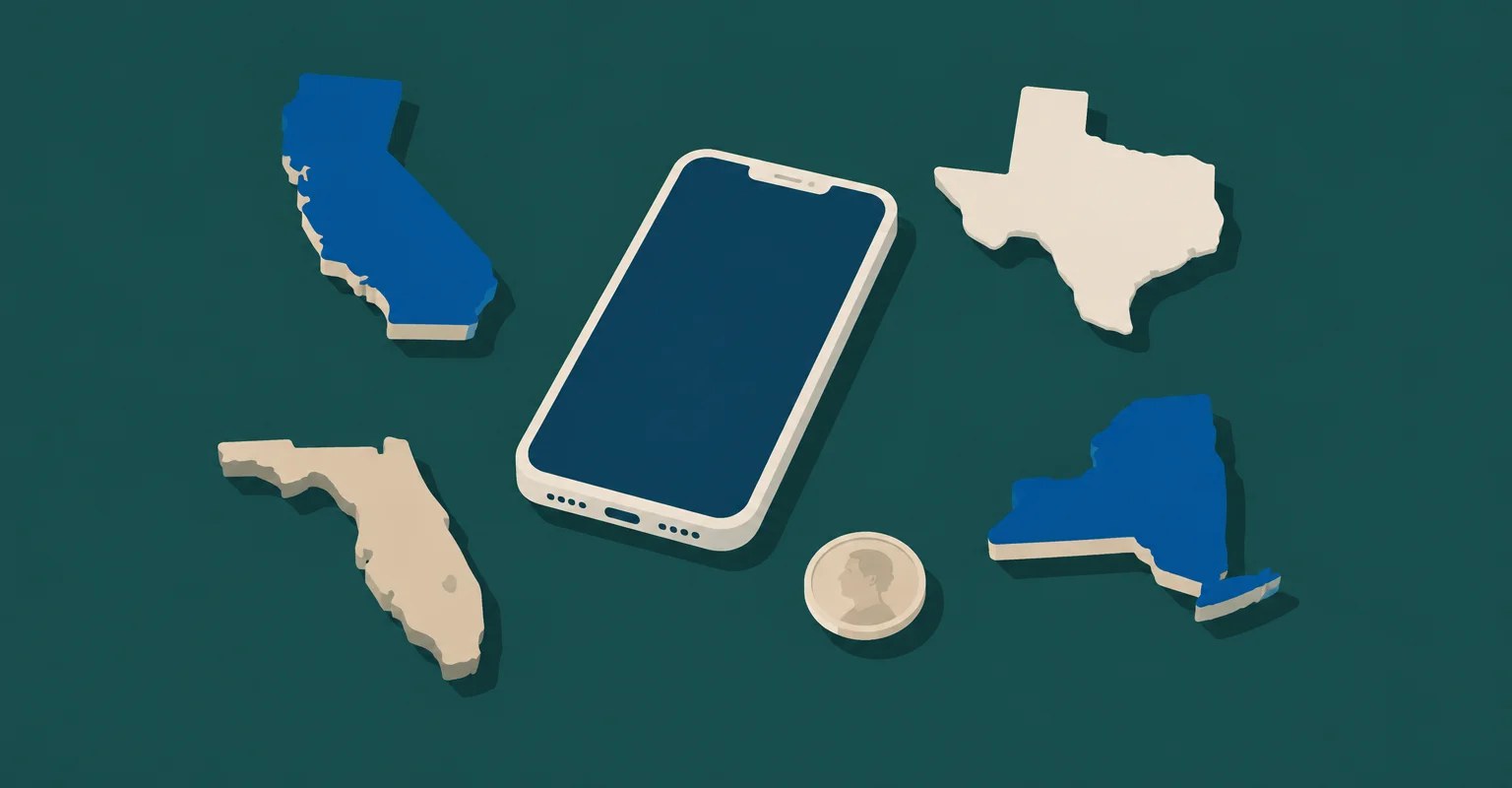
DraftKings has been running paid, state-specific ads for its Predictions platform in California, Texas, Georgia and Florida, with the campaign launching on 24 August. The ads present the product as “Now Available” in each state and offer new users $200 in bonus credits after an initial $5 trade.
The targeting is aimed at places where sports-betting access is limited or absent. California, Texas and Georgia have no legal sportsbook market at all, while Florida’s betting market exists only because of the Seminole Tribe’s exclusive compact with Hard Rock Bet.
The logic behind that choice rests on industry modelling rather than disclosed trading records. Eilers & Krejcik Gaming’s April Prediction Market Monitor estimated that 69% of U.S. sports event-contract volume comes from 19 states without legal online sports betting, and that California and Texas together account for 43% of national volume.
Those two states also matter because of their scale. SportsBoom said California and Texas together have about 65 million to 71 million residents, roughly a fifth of the U.S. population, while California has 21 major professional sports franchises and Texas has 11 teams across the four major leagues.
Georgia remains a difficult sports-betting market in its own right. SportsBookReview noted that House Resolution 450, which would have legalized sports betting, failed 63-98 earlier this year, and framed DraftKings’ push as using its CFTC-aligned prediction app to reach states where legislative change is not expected soon.
The campaign also lands at a moment when DraftKings is leaning on a product that is not yet part of its formal numbers. SportsBoom said 2026 revenue guidance of $6.5 billion to $6.9 billion came in below analyst expectations of about $7.3 billion, while management excludes Predictions from guidance entirely even as chief executive Jason Robins has projected up to $10 billion in gross revenue over time.
DraftKings says its market-making division, backed by its data science team and real-time pricing infrastructure, lets it price and provide liquidity for event contracts, and its DKeX exchange launched in June to route trades through its own infrastructure. The ads have also appeared against a legal backdrop that includes lawsuits alleging Predictions functions as an unlicensed sportsbook, tribal complaints to the Commodity Futures Trading Commission, and warnings from state regulators across the sector.
CNBC reported that the 9th U.S. Circuit Court of Appeals rejected prediction-market appeals in Nevada and said sports-related event contracts were sports bets, not swaps.